




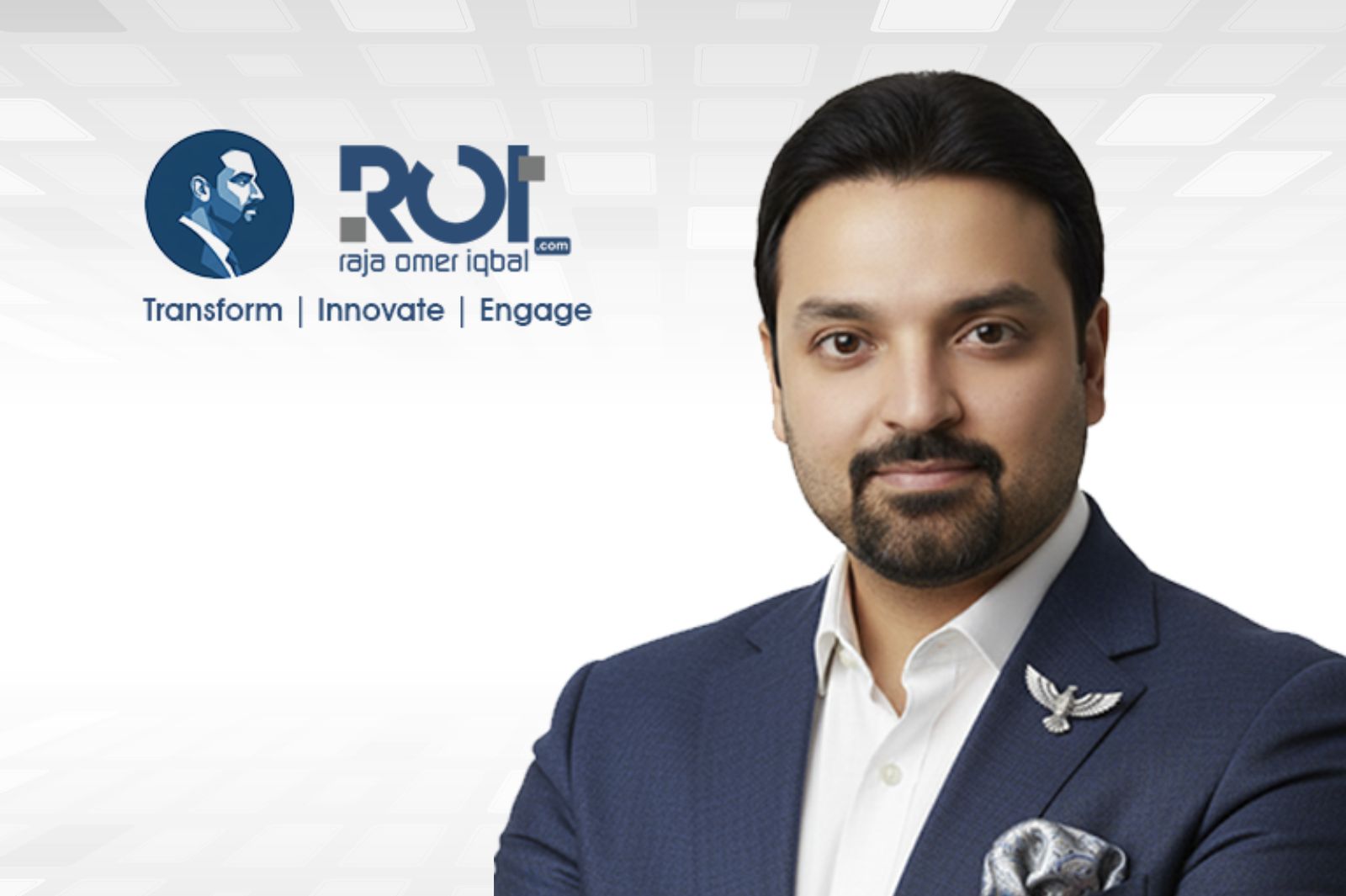
Raja Omer Iqbal is a technology entrepreneur, strategist, and startup mentor with over 2 decades of experience working at the intersection of innovation, branding, and brand growth. He has served as a jury member and advisor for national innovation programs, incubators, and investment initiatives, and has mentored startups across tech, SaaS, fintech, and emerging industries. Raja specializes in helping founders translate ideas into compelling, investor-ready narratives through data-driven pitch decks and strategic storytelling.
1. With nearly three decades of experience at the intersection of design and technology, what is the single biggest shift you’ve seen in how businesses approach digital innovation today?
Today, the biggest shift is that digital innovation is no longer about adding technology for the sake of progress. It is about solving real problems with measurable impact. Businesses are no longer impressed by fancy tools alone. They expect outcomes.
What has changed most is how design, data, and technology now work together as a single system. Earlier, these functions operated in their silos. Nowadays, successful organizations integrate them from day one, I always emphasize that innovation only works when insight, execution, and experience are all aligned towards a shared objective.
More importantly, the order of thinking has changed. We see strong organizations starting with user intent, validating assumptions through data, and then scaling through technology each day.
When companies reverse this order and start with tools, they usually end up with complexity instead of value. Over time, I have seen that the businesses that win are not the ones that adopt technology first, but the ones that apply it with clarity and purpose.
2.AI is rapidly becoming part of the creative process , how do you see it reshaping design and branding while still preserving human intuition and originality?
In my personal opinion, when we use AI as a collaborator and not as a shortcut, we truly make the best use of it in the creative process. AI is no longer limited to speed or automation. Its real value lies in how it supports better thinking and better timing. It helps teams explore ideas faster, test assumptions earlier, and arrive at stronger creative directions without rushing decisions.
Creativity will always come from human judgment, context of use, and taste. AI does not define meaning or culture , It can never interpret appreciation the way humans do, These elements are deeply human rooted and cannot be automated. However, when human vision leads and AI supports exploration and insights, Creativity becomes more intentional and strategic.
At its core, AI essentially expands the option space, It helps businesses explore more possibilities, validate assumptions faster, and make well-informed decisions at the right moment.
In my experience, time is the most valuable commodity in the business life cycle. AI gives time to think strategically, to test ideas early, and to refine narratives before going to the market.
3.Having worked with global tech brands and early-stage startups alike, what is the most common mistake organizations make during digital transformation, especially when adopting AI?
I have worked with a variety of clients and founders throughout my tech career.
The most common trend I see is mistaking adoption for transformation. Technology alone does not create value! Alignment does. Many organizations rush into automation without first fixing broken processes or unclear decision making. They boldly automate inefficiencies and expect different outcomes. This creates noise instead of progress and complexity instead of clarity.
True transformation starts before technology enters the picture. It requires aligning people, workflows, and intent. Automation should simplify work and empower teams, not create more layers of complexity. Without that foundation, even the most advanced systems fail to deliver meaningful results.
4.As an innovation coach, how do you help leaders build a future-ready culture and where does AI fit into that shift?
Honestly , I spend very little time talking about tools and a lot of time talking about the brand`s vision and goals. A future-ready organization begins with clarity around the problem, the people involved, and the outcomes they want to achieve.
AI merely fits in as a decision-support layer. It helps teams see patterns faster, test ideas sooner, and reduce guesswork. It supports momentum, but it does not replace leadership or accountability. If leadership encourages clarity, accountability, and learning, technology strengthens those qualities. If leadership avoids decisions, resists feedback, or operates in silos, AI simply accelerates the same dysfunction at a larger scale.
That is why building a future-ready organization is less about adopting systems and more about shaping the mindset. When leaders model curiosity and responsibility, technology becomes an enabler. Without that foundation, even the most advanced tools remain underutilized or at times misused. I think that technology just amplifies behavior, It cannot not modify it.
5.What advice would you give to emerging entrepreneurs in Pakistan and the UAE who want to compete globally, especially using GenAI and data-driven insights?
Today, geography is less of a barrier than strategy. For any emerging business, where you are located matters far less than how you think and execute. Founders in Pakistan and the UAE now have access to the same tools as anyone else, from GenAI and large language models to global platforms.
What matters is how these tools are applied. I’ve seen startups rely heavily on technology while overlooking real impact, user behavior, and the consumer mindset. They may build fast, but they do not always build smart. GenAI should support clear thinking, not replace it.
For emerging businesses, the focus should be on solving real problems, building with global standards, and clearly communicating value. Data and AI can accelerate this process , help test assumptions, understand user behavior, and validate demand before scaling. But once again, tools alone cannot not replace judgment, insight, or understanding of the market.
The real advantage comes when founders combine local insights with smart strategy and disciplined execution. This is what allows them to design solutions that not only work in their home market but also resonate globally.
