




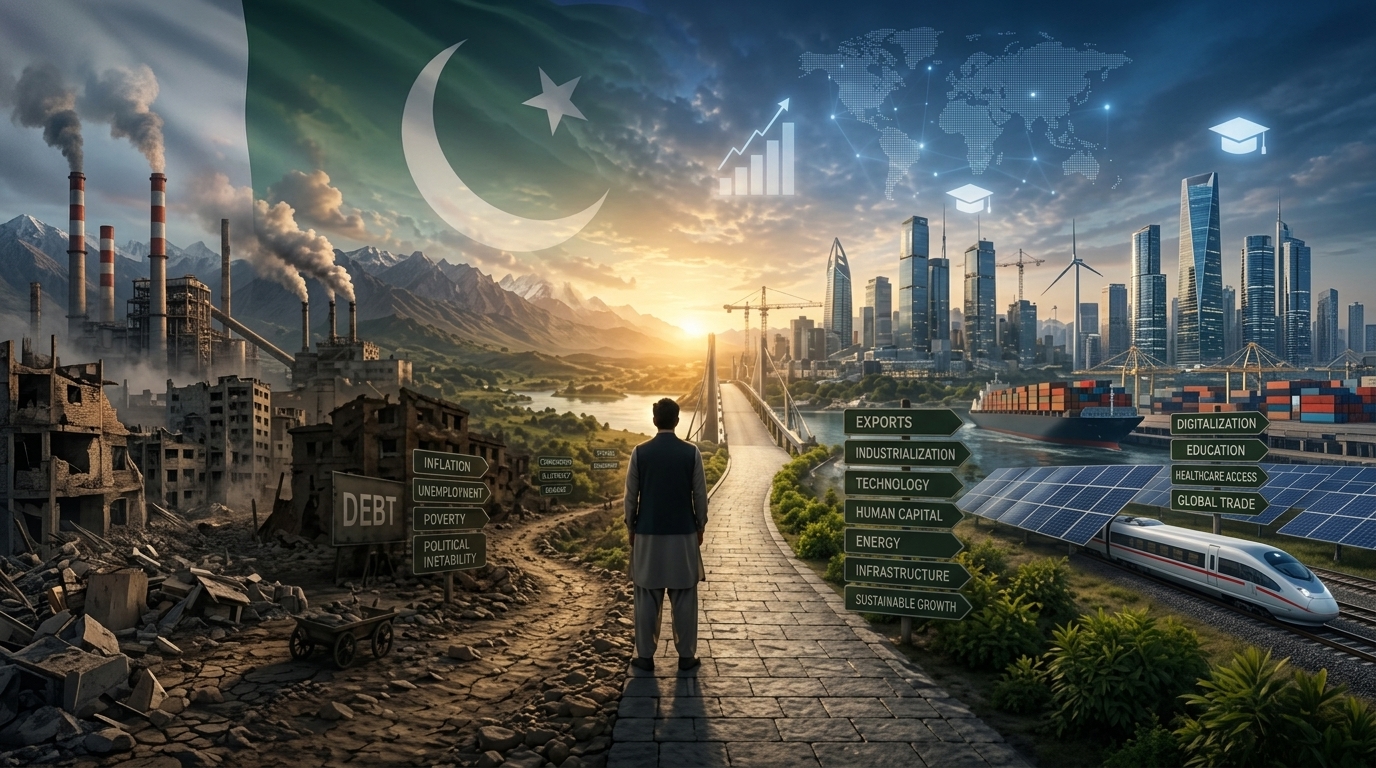
Pakistan is blessed with fertile land, abundant natural resources, diverse climatic conditions, and a strategic geographical location. With rich agricultural resources, mineral reserves, and a young and energetic population, the country possesses immense economic potential. Yet, despite these blessings, Pakistan continues to face structural challenges that have limited its journey towards sustainable prosperity.
Law and Order and Political Stability
Economic growth thrives in an environment of peace, stability, and policy continuity. While there have been improvements in the law-and-order situation over the years, but challenges remain. Coupled with political uncertainty and frequent policy changes, these concerns continue to undermine investor confidence and hinder long-term economic planning.
A businessman is naturally vigilant. His focus should be on innovation, expansion, customer satisfaction, and improving productivity. However, when attention shifts towards security concerns and uncertainty, the efficiency and entrepreneurial aggression are affected. Instead of creating value and employment, businesses become occupied with managing risks and uncertainty.
Inflation and Rising Cost of Living
Inflation remains one of Pakistan’s biggest economic challenges. Rising prices of food, fuel, electricity, and other necessities have reduced the purchasing power of citizens and increased operational costs for businesses. Maintaining profitability and competitiveness has become increasingly difficult, affecting investment and economic activity.
Shortage of Utilities and High Cost of Doing Business
Reliable electricity, gas, water, and infrastructure are essential for development. However, businesses continue to face high utility costs, supply disruptions, and inadequate infrastructure. Combined with inflation, taxation, regulatory complexities, and expensive financing, these challenges have significantly increased the cost of doing business and affected competitiveness.
The Burden on the Documented Economy
One of Pakistan’s major structural challenges is the imbalance between the documented and undocumented sectors. Businesses operating within the formal economy bear the burden of taxes and compliance requirements, while a large segment of economic activity remains outside the tax net. As a result, compliant businesses face higher costs while competing with those operating with fewer obligations. Despite paying taxes and fulfilling legal requirements, they often continue to suffer from inadequate infrastructure and rising utility costs.
Businesses are not deliberately resistant to documentation. In many cases, they are responding to market realities. Therefore, the transition towards a documented economy should be gradual and incentive-based, creating a level playing field rather than relying solely on enforcement.
Public Debt, Governance, and Global Challenges
Growing public debt and fiscal deficits continue to put pressure on the economy, leaving fewer resources for development and social welfare. Bureaucratic inefficiencies, inconsistent policies, and weak institutional capacity affect investor confidence and hinder business activity.
At the same time, Pakistan remains vulnerable to external shocks, including fluctuations in oil prices, geopolitical tensions, and global economic slowdowns. Strengthening economic resilience and export competitiveness is therefore essential.
Policy Recommendations
Pakistan’s economic challenges require long-term solutions based on consultation, continuity, and confidence. Major reforms should be developed through meaningful discussions with stakeholders, including businesses, trade bodies, industry associations, and policymakers.
The Government should undertake a comprehensive review of the documented and undocumented sectors and adopt a clear and sustainable direction. Whether through incentives, a properly designed amnesty framework, or other suitable measures, the objective should be to gradually integrate economic activity into the formal sector without disrupting existing businesses and economic momentum.
Equally important is the need for stable and predictable policies. Businesses make investment decisions with a long-term perspective and require consistency in taxation, regulations, and fiscal measures. Frequent policy changes create uncertainty, discourage investment, and increase the cost of doing business. Businesses can adapt to difficult policies, but they struggle to adapt to changing policies.
Fiscal measures should be introduced gradually, allowing businesses time to adapt and comply. At the same time, compliant businesses should be rewarded through improved infrastructure, reliable utilities, simplified regulations, and a level playing field. Economic reforms are more successful when they are based on facilitation rather than coercion.
Conclusion
Pakistan is not lacking in resources, opportunities, or entrepreneurial talent. Blessed with fertile land, strategic importance, and a resilient population, the country has the potential to become a strong and prosperous economy.
The journey from potential to prosperity requires stability, consistent policies, strong institutions, and collective effort. By creating an enabling environment for businesses and citizens alike, Pakistan can transform its blessed potential into sustainable prosperity and secure a brighter future for generations to come.
The promise of Pakistan has never been in doubt; the challenge lies in converting that promise into lasting progress.
About the Author:

Ali Muhammad Usmani
Chief Secretary
Hafiz Limited
