




A Fleet and Airline Boom
The most visible sign of this impending growth is the significant fleet expansion planned across both established and new carriers. The industry anticipates the addition of over 25 aircraft in 2026 alone, which would mark the highest annual influx in the country’s history. Existing players are scaling up: AirSial plans to add five aircraft, Fly Jinnah four, and Airblue is set to induct several narrow-body jets alongside wide-body aircraft—a positive signal for international route development.
After a period of uncertainty, Serene Air is expected to bounce back under new management, further bolstering market capacity.
Simultaneously, the market is diversifying. New entrants like South Air and Alvir Airways are preparing to launch operations with turbo-prop aircraft Under TPRI (Tourism Promotion & Regional Integration) initiative , a strategic move to connect feeder towns with major trunk routes. This development promises to integrate smaller cities into the national aviation network, spurring regional economic activity.
Furthermore, the anticipated launches of Air Punjab and Air Karachi later in the year could contribute an additional six to eight aircraft to the national fleet.
The Privatization Catalyst: A New Era for PIA
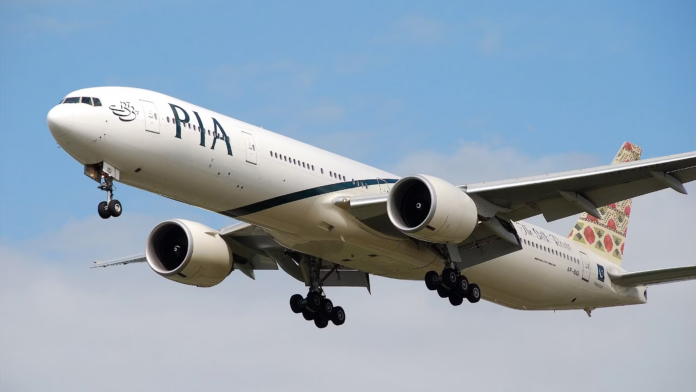
Undoubtedly, the cornerstone of 2026’s aviation narrative is the planned privatization of the national flag carrier, Pakistan International Airlines (PIA). This transition, a flagship initiative of the government’s economic reform program, is viewed as a game-changer. Handing over PIA to private management is expected to drive significant improvements in operational efficiency, financial discipline, and service
quality. Plans include consolidating and modernizing the fleet—including returning grounded aircraft to service—developing new routes, and revamping inflight products.
The potential impact is substantial. The eagerly awaited resumption of the lucrative London route in March-April 2026 is projected to significantly boost revenues. Even more ambitiously, there is talk of launching direct flights to the United States and expanding European networks. A revitalized, privately-managed PIA could not only reclaim its stature but also serve as a powerful ambassador for Pakistan’s soft image globally.
Infrastructure and Ecosystem Development
Growth in the skies must be matched by development on the ground. Fortunately,
2026 is also slated to be a landmark year for aviation infrastructure, driven by public- private partnership models encouraged by the government and prioritized in national development plans. While the expansions of major hubs in Lahore, Karachi, and Islamabad are critical, a concerted effort is also underway to elevate regional connectivity. Multiple regional airports are slated for significant upgrades, including those in Sukkur, Hyderabad ,Skardu, Chitral, Sialkot and Dera Ismail Khan.
These enhancements, focused on runway improvements, terminal modernization, and enhanced navigational aids, are essential for supporting the new feeder servicesplanned by turbo-prop operators and unlocking the economic potential of secondary cities.
A flagship project symbolizing this regional push is the New Faisalabad International Airport. As a major industrial and export hub, Faisalabad’s need for modern, direct air connectivity is acute. This greenfield project is being designed to handle both passenger and substantial cargo traffic, serving as a vital logistics node for Pakistan’s textile and manufacturing heartland. Its development is a clear signal that aviation strategy is being aligned with industrial policy.
In a transformative parallel move, the government plans to privatize the operations of Islamabad, Lahore, and Karachi airports through open bidding, attracting international expertise. Global giants like Menzies Aviation have already expressed keen interest, signaling foreign confidence in Pakistan’s aviation market. For general aviation and pilot training, the new Muridke Aerodrome (an alternative to Lahore’s Walton Airport) is entering its second phase of development and is expected to be fully operational later this year. Furthermore, the planned establishment of Maintenance, Repair, and Overhaul (MRO) facilities at Islamabad and Karachi airports promises to develop a valuable maintenance sector, creating jobs and reducing aircraft downtime and overseas costs for Pakistani airlines.
International Confidence, Education, and Technological Advancement
The sector’s attractiveness is further underscored by growing international interest, facilitated by more open bilateral aviation policies. Alongside existing carriers, new international airlines like Bangladesh’s Biman and Saudi Arabia’s Flyadeal have entered the market, while Norway’s Norse Atlantic UK is reportedly eyeing Pakistani routes. Increased frequencies from foreign airlines reflect growing confidence in Pakistan’s aviation economy and passenger demand.
Critically, this industrial growth is being supported by parallel investments in human capital and technological innovation. The Civil Aviation Training Institute (CATI) is expanding its reach with satellite campuses and an upgraded main campus. Furthermore, the development of the National Aerospace Science and Technology Park (NASTP) marks a pivotal leap. Designed as a premier ecosystem for research, development, and innovation, NASTP aims to foster collaboration between academia, industry, and the Pakistan Air Force. It is poised to become a hub for aerospace technology, avionics, and drone development, creating a high-tech talent pipeline and attracting global aerospace firms.This, combined with universities across Pakistan now offering specialized aviation degrees, ensures that 2026 will produce a new generation of aviation professionals and engineers equipped to support the industry’s expansion both locally and internationally.
Cleared for Takeoff? Cautious Optimism is Key
The trajectory for Pakistani aviation in 2026 is undoubtedly positive. From fleet expansion and airline privatization to infrastructure modernization—spanning mega-hubs, regional airports, and visionary projects like Faisalabad’s new airport—educational reform, and the technological promise of NASTP, the pillars for growth are being erected. The projected surge in aircraft numbers and passenger movement are strong leading indicators, largely fueled by the strategic direction set by the Government of Pakistan.
However, a smooth takeoff requires navigating persistent headwinds. The privatization of PIA and the major airports must be completed transparently and efficiently. Macroeconomic stability, including manageable fuel costs and a favorable exchange rate, remains crucial. Regulatory oversight must keep pace with growth to ensure unwavering safety standards. Furthermore, there is a compelling argument for tax policy reform. A strategic revision and reduction of the prohibitively high taxes currently levied on premium (Business-class) could serve as a powerful catalyst.
Equally critical is the permanent resolution of the long-standing issue of international airline remittances. Ensuring that foreign carriers can reliably repatriate their revenues from Pakistan is a fundamental requirement of a credible and open aviation market. Addressing this, alongside tax reform, would make Pakistan a decisively more competitive and attractive destination, directly boosting airline revenues and traveler demand. This would not only encourage existing international carriers to expand their footprint but would also serve as the most credible incentive for new international airlines to target the Pakistani market. Finally, the industry’s ultimate trajectory remains inextricably linked to the country’s broader economic and political stability.
In conclusion, 2026 presents a watershed opportunity for Pakistan’s aviation industry. The plans and projections, backed by serious governmental policy initiatives and spanning from the tarmac to technology parks, reveal a sector on the cusp of a major transformation. While challenges exist, the alignment of state-led policy, private investment, regulatory will, infrastructural development, and innovation creates a compelling case for optimism. If key reforms—from privatization and pragmatic tax restructuring to resolving systemic financial hurdles for international partners—are realized, 2026 may well be remembered as the year Pakistan’s aviation sector truly took flight, ready to claim its role as a significant contributor to the nation’s economic journey.
 About the Author: